

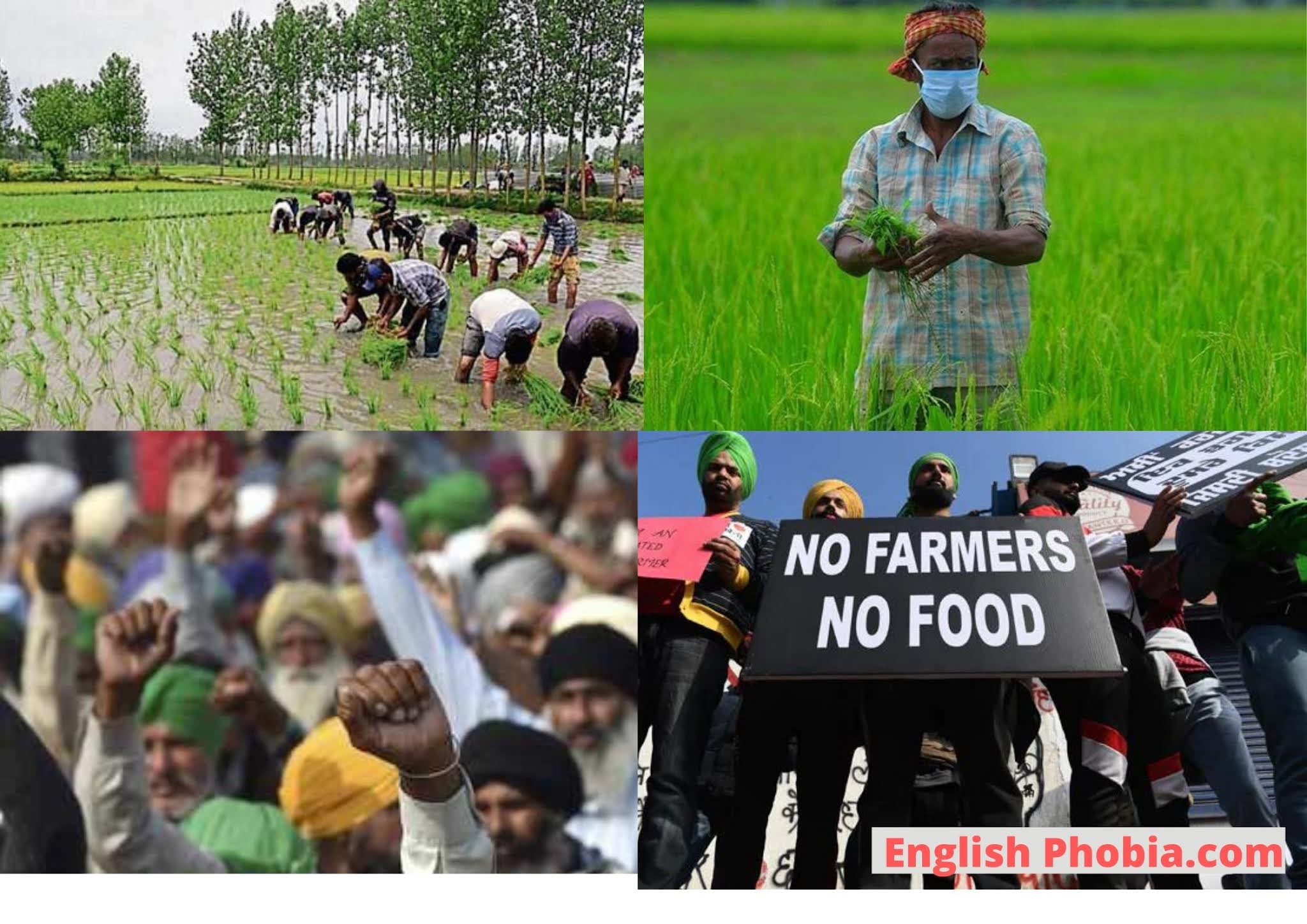
India has always been an agricultural country for centuries. It possesses immense fertile land for agriculture and provides approximately 74.56% of people an employment including other sectors which are directly or indirectly connected with farming. India got freedom on 15th August, 1947 from the British government. Indian population was only around 340 million according to the very first census conducted in 1951 and 89.28% was totally dependent on farming, but currently it is almost 1.27 billion and the seventh largest country with an area of 3.288 million square kilometers. The farmers are known as food providers and also prominent as ‘the god of grains’ who make the every life possible in an unimaginable way. The importance of farmers in India can easily be figured out through a report which is a proudly fact for an Indian that the Indian farmers grow so much grains annually that they alone can feed all the countries constantly for six months, but it has a bad luck too that India doesn’t has a special covering facility for a Cricket ground but not a proper grain storage which destruct the life-saving grain seeds in the rain to wipe away in drainage and sewage.
India has different lands that vary state per state and it enables to grow ample types of crops in a country grains like rice, wheat, green millet, pearl millet, maize, poddy, mustard, sorghum, mung, lentil, peas, cowpea and in vegetables lady’s finger, potato, tomato, brinjal, cabbage etc. This increases the production of different editable substances which are in a great demand. The king of spices Kerala one of the states in India is famous for spices across the world for decades. It is the exporter state for spices to many different countries. It mainly grows pepper, cardamom, clove, cumin, cinnamon, ginger, turmeric, nutmeg, tamarind curry leaves cambodge and vanilla.
He doesn’t have
a prosperous life with all the advanced facilities available presently almost at
every home since daily life of a
farmer undergoes with endurance the hardship in fields with extremely
the Sun’s heat in summer. He toils in the fields painstakingly in order to have
life storing seeds to be germinated. He never hopes to avail himself of such a
facility because he knows that he has a huge responsibility to grow the crops
for the nation. He rarely make time to spend with his family as a day in the life of a farmer
starts at extremely morning from going to the fields and work with an
expectation of having a an awesome crops at the end of a season because it
takes a lot of time from growing a crop to its cultivation with a good deal of
processes at the different stages of a crop like seeding, watering, weeding,
cultivation and finally storing. After the completion of these steps he takes
the crops to the market for people to buy for themselves and then awaits a lot
of time for the payment which takes even months or sometimes a year. Although
there is a great majority to the agriculture in India but still the life of
farmers is very miserable. The one who providers grains for others, his own
home stays foodless.
Life of farmers in India is full of grievance, toil and loans that he can never repay it will
his hard work throughout life. The scream of having no money or proper food can
easily be heard in most of the homes that forces a farmer to attempt suicide. The
date provided by Wikipedia.org states that the farmer’s suicide rate in India
had ranged between 1.4 and 1.8 per 100,000 total population, over a 10-year
period through 2005, however, the figures in 2017 and 2018 showed an average of
more than 10 suicides daily.
It is hoped that
all of us are clearly aware of the current
condition of farmers in India 2021 through an ongoing protest against
the government for the retreat of 3 bills that can affect the life of general
public including farmers but the public might take them wrong thinking that
this protest is only for the peasants.
Reasons for farmers protest
·
Retreat 3 bills on agriculture: the
farmers demand the government to take the 3 bills back as these are not in the
favor of them because they proliferate the agricultural privatization and will
benefit only the landlords or major peasants.
·
A written agreement: they demand an
agreement in black and white for assurance that the MSP (minimum support
prices) fixed by the government will last as usually.
·
Electricity bill 2020: the latest
provision threatens the farmers as per their perspective because it curtails
the subsidy which used to be provided to them.
·
Haystack burning punishment: the central
government made an amendment that if any peasant is found burning the haystack,
he will be charged with a huge fine and an imprisonment for a period of 5
years.
·
Peasants out of jail: they are also
demanding the other farmers who were arrested under the haystack burning
punishment to be free from this charge.


0 Comments